
Intrinsicly evisculate emerging cutting edge scenarios redefine future-proof e-markets demand line
Gallery Posts


Intrinsicly evisculate emerging cutting edge scenarios redefine future-proof e-markets demand line

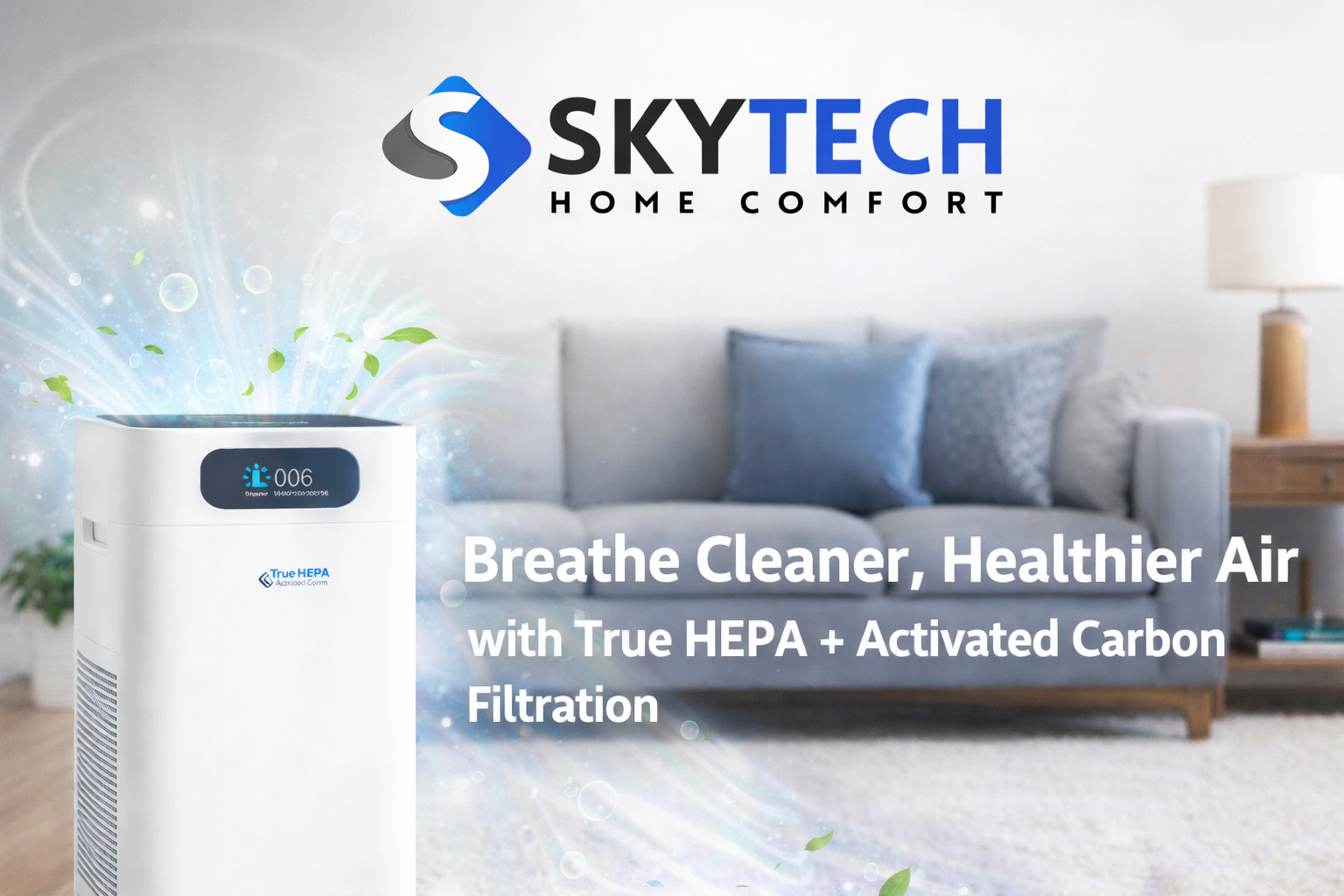
Learn how True HEPA air purifiers improve indoor air quality by capturing allergens and fine particles. Find out how to choose the right purifier for your home.
Still dealing with dust, sneezing, or watery eyes even after regular cleaning? The issue often is not your vacuum or your routine. It is the microscopic allergens floating in the air that normal cleaning cannot remove. Pet dander, pollen, and tiny dust particles can stay airborne for hours, and that is where an air purifier becomes a real help.
A True HEPA filter is not just a catchy label. It is a strict performance standard. Products using the term True HEPA must meet a proven benchmark. They are tested to capture at least 99.97 percent of airborne particles as small as 0.3 microns. This is the key difference when comparing True HEPA and HEPA type filters.
To understand how small 0.3 microns is, think about this. A human hair is roughly 70 microns wide. So a True HEPA filter is designed to trap pollutants that are more than 200 times smaller than a hair.
That 0.3 micron number matters because it covers many common allergy and asthma triggers such as mold spores, dust mite debris, and pet dander. In other words, True HEPA filtration does not just move air around. It actively cleans it.
True HEPA Standard
True HEPA filters must capture 99.97 percent of particles at 0.3 microns. This helps reduce allergens like pollen, pet dander, dust mite debris, and mold spores.
Odors Need Carbon
HEPA filters do not remove gases or smells. For odors, smoke smell, and VOCs, you need an activated carbon filter. Best results usually come from a combo unit.
Choose the Right Size
Pick a purifier with a CADR at least two thirds of your room’s square footage. Also consider noise levels and replacement filter costs.
When shopping, you will see phrases like HEPA type, HEPA like, 99 percent HEPA, and other similar claims. The problem is that these terms are not regulated standards. They can sound impressive, but they do not guarantee any specific level of filtration.
A simple way to picture it is this.
True HEPA is like a finely tested net that catches extremely small particles.
HEPA type is more like a net with larger holes. It may catch visible dust, but fine allergens can still pass through.
That is why many people buy a cheaper HEPA like purifier and wonder why allergy symptoms do not improve.
SkyTech Tip
Always look for the exact words True HEPA in the specs. If it does not say that clearly, the filter may not meet the real standard
True HEPA filters are excellent at trapping solid particles that trigger allergies and breathing issues. They commonly capture:
But here is the limitation. HEPA works like a particle trap. It cannot capture gases.
So while it can trap smoke particles, it will not remove:
For those, your purifier needs another layer of filtration
To reduce smells and chemical fumes, you need activated carbon. Instead of blocking particles like a net, carbon works more like a sponge. It adsorbs odor and gas molecules from the air.
Activated carbon is highly porous, meaning it has a huge internal surface area where VOCs and odors can cling and get trapped. This is especially important for common indoor pollutants released from:
That is why the best solution is a True HEPA and Activated Carbon purifier. Together, they:
Forget the purifier’s physical size. What matters is how much clean air it can deliver. The most useful measurement is CADR Clean Air Delivery Rate, which works like a performance score.
Easy Rule of Thumb
Your purifier’s CADR should be at least two thirds of your room’s square footage.
Example
If your room is 150 square feet, choose a purifier with a CADR of 100 or higher.
You will often see three CADR values for dust, pollen, and smoke. Use the smoke CADR as your main guide because smoke particles are tiny and harder to capture. If it performs well for smoke, it will usually perform well overall.
Bonus. Choosing a slightly higher CADR means you can run it on a lower fan speed and still get good performance, which is ideal if you want a quieter unit for bedrooms.
A purifier can be powerful, but comfort and long term cost matter too.
1 Noise Levels
If you want a quiet bedroom setup, look for 30 dB or lower on the lowest setting. That is about as quiet as a soft whisper.
2 Placement
Purifiers need breathing room. Avoid pushing them against walls or hiding them behind furniture. For best airflow, keep at least 12 inches of space around the unit so it can pull in dirty air and circulate clean air efficiently.
3 Filter Replacement and Running Costs
The purchase price is only one part of the cost. You will also replace filters.
HEPA filters typically last 12 to 18 months.
Carbon filters often need replacing every 3 to 6 months.
Also check energy usage. If you want lower electricity costs, look for Energy Star certification.
Now you are equipped to shop smarter. You can ignore confusing marketing phrases and focus on what truly improves indoor air quality. Choose a certified True HEPA filter, add activated carbon if you care about odors and VOCs, and pick the right CADR for your room size.
The best air purifier choice comes down to performance, not marketing. A True HEPA filter is essential for trapping ultra fine allergens and particles, while activated carbon is needed to reduce odors and chemical gases. When you size the purifier correctly using CADR and consider noise, placement, and filter costs, you will get results you can actually feel. Cleaner air, fewer irritants, and better comfort at home.