
Intrinsicly evisculate emerging cutting edge scenarios redefine future-proof e-markets demand line
Gallery Posts


Intrinsicly evisculate emerging cutting edge scenarios redefine future-proof e-markets demand line

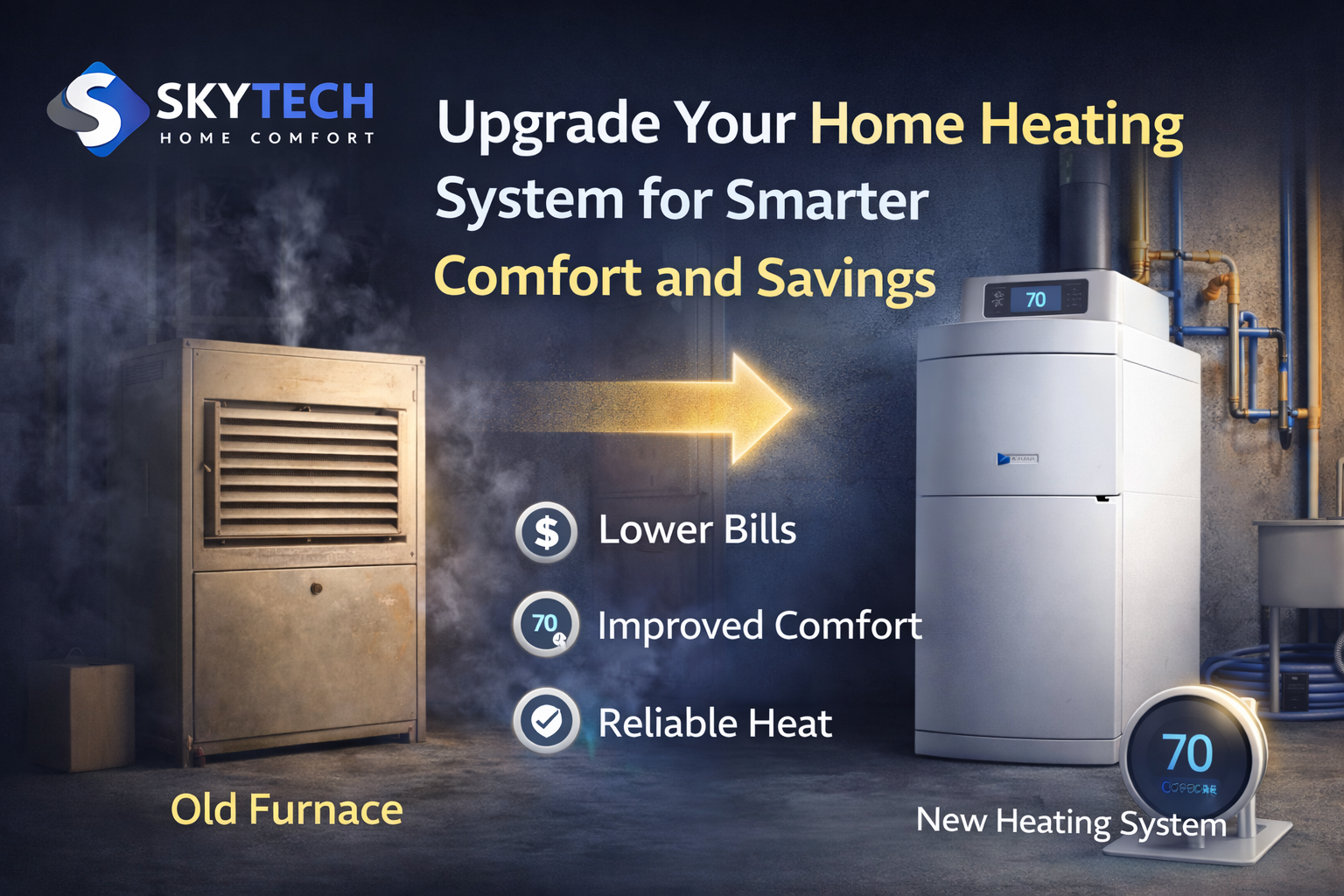
At SkyTech Home Comfort, we made this guide to help you understand when it is time to replace your heating system, how to compare modern heating options, and how to choose the best setup for your home and budget.
If your old furnace makes loud noises, heats unevenly, or you worry it might stop working on the coldest day, you are not alone. An older heating system can become unreliable over time. It may still run, but it usually uses more energy than it should, which means higher monthly bills.
Upgrading is not only about avoiding an emergency breakdown. A newer system can heat your home more evenly, run much quieter, and help lower your heating costs. Many homeowners also notice better comfort in rooms that used to feel cold or drafty.
At SkyTech Home Comfort, we made this guide to help you understand when it is time to replace your heating system, how to compare modern heating options, and how to choose the best setup for your home and budget.
Cost Savings
Replacing an older furnace with a high efficiency model can reduce energy waste and lower your yearly heating bills. Many ENERGY STAR certified systems can save homeowners over 100 dollars per year, depending on usage and local rates.
Improved Comfort
A new heating system can deliver more even warmth throughout the home and help reduce cold spots. It also runs quieter than older systems.
Reliability and Peace of Mind
Upgrading helps you avoid surprise breakdowns during winter and gives you a more dependable system you can rely on for many years.
Waiting for your furnace to fail during winter can be stressful and expensive. Most systems show warning signs before they fully break down. Here are three common signs it may be time to plan a replacement.
Age and Rising Bills
Most furnaces last around 15 to 20 years. If your system is in that range and your heating bills keep going up even though your thermostat habits are the same, your furnace may be losing efficiency.
Strange Noises
A healthy system usually makes a steady airflow sound. Loud or unusual noises can point to bigger problems. Watch for these.
Grinding or scraping can mean a motor or internal part is wearing out
Loud squealing can mean a blower or belt problem
Frequent clicking can mean the ignition or flame sensor is struggling
Uneven Heating
If some rooms feel warm while others stay cold, your system may be losing performance or may not be the right size for your home anymore. In many cases, a new system plus proper sizing can fix this comfort issue.
AFUE stands for Annual Fuel Utilization Efficiency. It tells you how much of the fuel your system uses actually becomes heat inside your home.
For example, an older furnace might be 80 percent AFUE. That means 80 percent of the fuel becomes heat, and about 20 percent is wasted. A modern high efficiency furnace can be 95 percent AFUE or higher. That means far less fuel is wasted and more of it becomes usable heat.
The higher the AFUE, the more efficient the system is, and the more you can save over time.
Most homeowners compare two main options, a furnace or a heat pump. They work differently.
A furnace makes heat by burning fuel such as natural gas. Furnaces are known for strong heating, especially in very cold weather.
A heat pump works by moving heat instead of creating it. It pulls heat from the outside air and brings it inside. Many heat pumps can also work as an air conditioner in summer, so one system can handle both heating and cooling.
A simple way to decide is climate.
If winters are long and very cold, a furnace is often a strong choice
If winters are milder, a heat pump can be a great energy saving option
In some homes, a dual fuel setup can also be an option, where a heat pump handles mild weather and a furnace handles extreme cold.
Costs can vary based on your home and the type of system you choose. In many areas, a furnace replacement may cost around 3,500 to 7,500 dollars. A heat pump system may range from about 4,500 to 10,000 dollars or more.
What affects the price most
Efficiency level
Higher efficiency systems cost more upfront but can lower monthly bills
System size
Heating systems are sized based on your home. Bigger homes often need larger units
Installation needs
Some homes need venting changes, electrical updates, or ductwork improvements. These can add to the total cost
What a professional quote often includes
The new unit
Installation labor and testing
Removal and disposal of the old system
Any needed upgrades to vents, ducts, or electrical
A quality install matters as much as the equipment. A system that is installed correctly will run better, last longer, and provide better comfort.
Choosing the right installer is a big part of getting good results. At SkyTech Home Comfort, we recommend getting at least three written quotes so you can compare what is included.
Will you do a Manual J load calculation
This helps choose the correct size system for your home. Guessing the size can lead to higher bills and comfort problems.
Will you provide an itemized quote
A detailed quote helps you understand exactly what you are paying for.
Are you licensed and insured
This protects you and shows the contractor meets local requirements.
A contractor who answers clearly and explains the process is usually a safer choice than one who only offers a quick price.
The price you pay upfront is not always the final cost. Rebates, local utility incentives, and energy programs can sometimes reduce the total cost of upgrading.
A smart thermostat can also help you save every year by adjusting the temperature automatically when you are sleeping or away. Many homeowners see noticeable savings over time just by upgrading control and scheduling.
Pairing the right system with rebates and smart controls is a strong way to get the best value from your upgrade.
Upgrading your heating system is a smart long term decision. A newer system can lower energy waste, improve comfort with more even heat, and reduce the risk of winter breakdowns. By watching for signs your old system is struggling, understanding efficiency ratings, and comparing modern heating options, you can choose a setup that fits your home and budget. With the right installation and smart controls, your home becomes warmer, quieter, and more efficient for years to come.