
Intrinsicly evisculate emerging cutting edge scenarios redefine future-proof e-markets demand line
Gallery Posts


Intrinsicly evisculate emerging cutting edge scenarios redefine future-proof e-markets demand line

Introduction
Your furnace fails on the coldest night of the year. It’s a classic homeowner nightmare. The frantic call to an HVAC technician is followed by a daunting quote for a new system. Then someone mentions a heat pump. They claim this single unit can both heat and cool your home, making your old furnace obsolete. It sounds revolutionary. But can one machine truly replace the dedicated heating powerhouse you’ve always known, especially when the temperature plummets?
The common answer is a frustrating “it depends.” I’m here to tell you that’s the wrong way to look at it. The real question isn’t about a one-for-one replacement. The smartest strategy is about fundamentally changing your furnace’s job description from a lead role to a supporting actor. Forget replacement. Think about a promotion to a smarter, more efficient heating team.
What Everyone Gets Wrong About Heat Pumps in the Cold
Let’s clear the air on a stubborn myth. Many people believe heat pumps stop working when it gets truly cold. This was true of older models, but modern technology has completely changed the game. Today’s cold climate heat pumps are engineering marvels. They are meant to efficiently draw heat out of outside air, even when the thermometer drops as low as 5°F (-15°C), with many models comfortable around and below that temperature.
These aren’t your grandparents’ heat pumps. Brands such as Mitsubishi, whose products feature Hyper-Heat technology or Fujitsu’s Halcyon series are designed specifically for harsh winter conditions. The spec you should be seeking is the Heating Seasonal Performance Factor, or HSPF2. An older unit may have an HSPF2 rating of roughly 7.5, while a new cold-climate model can top 10. That’s a big step forward in efficiency. Moreover, they can operate at low temperatures at 100% heating capacity, something that was unheard of with the previous technology.
So, When Does My Old Furnace Actually Run?
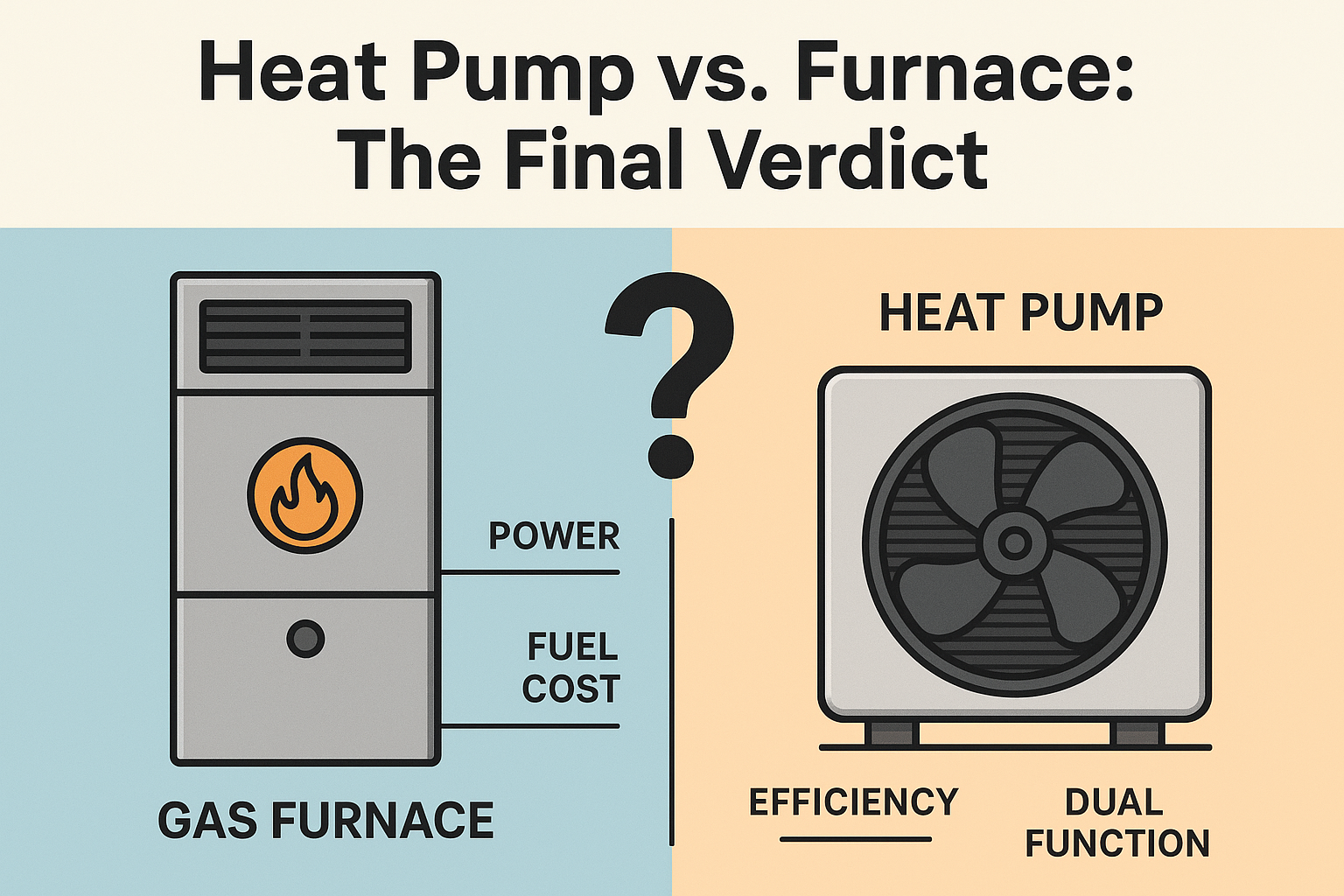
This brings us to the most important concept in modern heating: the dual fuel system. A dual fuel setup pairs a new, high-efficiency air source heat pump with a furnace, which can be your existing one if it’s in good shape. They work together, managed by a smart thermostat. This isn’t just a backup plan. It’s a calculated strategy to slash your energy bills.
Here’s how it operates. So, up to a certain outdoor temperature, say 30°F (-1°C), the heat pump provides all your heating demand. It does so with amazing efficiency, frequently 2-3 times less energy than your furnace would. This is where you see massive savings.
Once the temperature drops below that pre-set “balance point,” the smart thermostat automatically switches off the heat pump and turns on your furnace. The furnace then takes over for the coldest hours of the year. You get the best of both worlds. You have the amazing efficiency of a heat pump for 90% of the winter and the raw power of a gas or oil furnace for the most extreme cold snaps.
A Real-World Example: The Millers’ $700 Winter Mistake
My neighbors, the Millers, installed a new heat pump last year but opted against dual fuel configuration. They wanted to go all-electric. Their system included supplemental heat strips, which are essentially giant electric coils like those in a toaster. This is often called “emergency heat.” During a week-long polar vortex, their heat pump couldn’t keep up alone. The emergency heat kicked in constantly.
The next month, their electricity bill was over $700 higher than usual. They had traded one expensive fuel source for another. If they had kept their existing gas furnace as a backup, they would have paid a fraction of that cost during the cold snap. Relying on electric resistance heat is a financial trap.
H2: Is a Dual Fuel System the Smartest Choice?
The practical, cost-effective choice for almost any home in a climate that gets cold in winter is to go with a dual fuel system. You are utilizing what you already have (the furnace and ductwork), and pairing it with new, very efficient equipment. This technique is the most economical and comfortable.
It is all about how it’s set up. A certified HVAC contractor needs to conduct a “Manual J” load calculation. This calculates your home’s precise heating and cooling requirements, according to the size, shape and construction of your window. Without this calculation, you may end up with an oversized (or undersized) system and any savings will disappear. Better insulation or windows can also greatly impact your home’s readiness, a crucial step before any upgrade.
How Do I Know If My Home is Ready?
Before you reach for that phone, consider your home envelope. Do you have drafty windows? Is your attic insulation thin? No heat pump, however efficient, will be able to compensate for a leaky house. And paying to do an energy audit can be a great investment. For a couple of hundred bucks, you can hire an expert to figure out where in your home that heat is escaping.
One of the great things about high-efficiency heat pumps is that federal and state programs typically make generous rebates and incentives available to those who install them. In some cases, with promotions and rebates factored in, homeowners discover that the upgrade is less expensive than a conventional furnace replacement.
Your Next Smart Step
We’ve established that a heat pump can absolutely handle the bulk of your heating needs. The debate over replacing your furnace is the wrong one to have. The right perspective is to make a smarter, hybrid system that lets each technology do what it does best. The heat pump is absurdly efficient for most of the year, and the furnace is a valuable fault for the very worst of the weather. This attitude saves you money, increases your comfort, and lowers your carbon footprint – and you don’t even need to start from scratch. Your furnace isn’t old-fashioned – it’s just looking for a smarter new job.
So, what is the single biggest question you still have about making a heat pump part of your home’s heating team?