

Intrinsicly evisculate emerging cutting edge scenarios redefine future-proof e-markets demand line
Gallery Posts


Intrinsicly evisculate emerging cutting edge scenarios redefine future-proof e-markets demand line

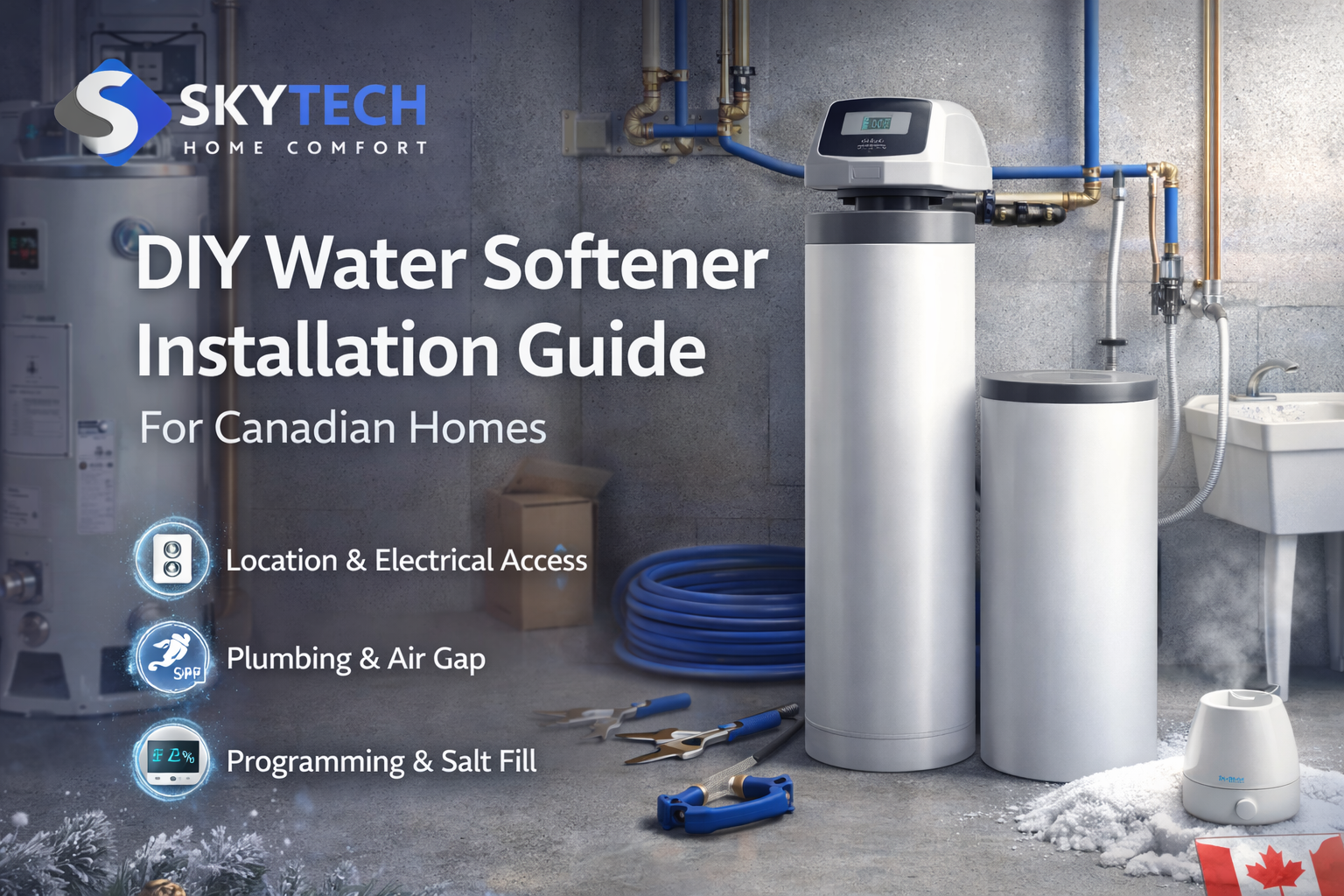
Install a home water softener system the right way with this simple guide. Enjoy spot free dishes, softer skin, and better plumbing protection in your Canadian home.
If you are constantly wiping white chalky spots off your shower glass, you are dealing with hard water. Hard water often causes cloudy dishes, dry skin, and stiff laundry. Over time, those minerals can also build up inside pipes and appliances. That buildup can reduce performance and shorten the life of your water heater, dishwasher, and washing machine.
A whole house water softener is one of the best ways to solve this problem. Once it is installed, you can notice the change quickly. Laundry feels cleaner, dishes dry without spots, and your skin can feel smoother. At SkyTech Home Comfort, we created this guide to help you understand the steps for a DIY installation, from planning and plumbing connections to setup and programming.
Process
A water softener uses a process called ion exchange. It removes hard minerals like calcium and magnesium and replaces them with softer ions using resin beads. The beads are cleaned during a regeneration cycle using a salt and water solution.
Installation
A good DIY install depends on choosing the right location, building a bypass loop, connecting the drain line correctly with an air gap, and programming the settings based on your water hardness.
Benefit
Soft water helps protect plumbing and appliances from scale buildup, improves cleaning results, and gives everyday comfort benefits like smoother skin and spot free dishes.
A water softener mainly works using ion exchange. Inside the main tank, there are small resin beads. These beads attract and hold the hard minerals that cause scaling, mainly calcium and magnesium. As water passes through, the beads remove those minerals and release softer ions in their place. This is how softened water flows throughout your home.
Over time, the beads fill up and need to be cleaned. That is where the brine tank comes in. The brine tank holds salt and water that forms a salty solution. During a regeneration cycle, the system flushes the resin beads with brine, pushes the collected minerals out, and sends them to the drain. After a rinse, the resin is ready again.
This is why you need to add salt to the brine tank from time to time.
Many homeowners consider DIY installation to save money. A plumber can add a few hundred dollars to over a thousand dollars depending on the job and location. DIY can be a good option if you are comfortable with basic tools and careful step by step work.
DIY can be a good fit if you can do these things comfortably.
1 Find and turn off the main water shutoff
2 Measure and cut pipe accurately
3 Follow multi step instructions without rushing
4 Lift and move heavy items around 50 to 75 pounds
For many homes, a DIY installation can take about two to four hours. However, if your plumbing is old, your space is tight, you do not have a good drain nearby, or your layout is complicated, professional help is often the safer choice. A small mistake can lead to leaks, water damage, or poor system performance.
Before you start, take time to plan. This makes the installation easier and helps you avoid common problems.
Check your water hardness
You need your water hardness level in Grains Per Gallon GPG. You can find this from your city water report or use an affordable test strip at home. Higher GPG means you will need a higher capacity softener.
Choose the best location
The best place to install a softener is usually near the main water line where water enters your home. You also want it close to an electrical outlet and near a drain such as a floor drain or a utility sink. In Canada, many installations are done in a basement, garage, or utility room.
Gather the tools and fittings
Many DIY installs are easier with PEX tubing and push to connect fittings because they do not require soldering. Common tools include a pipe cutter, tape measure, adjustable wrenches, a deburring tool, a bucket, PEX tubing, and the correct fittings.
Start by shutting off the main water supply. Then open the lowest faucet in your home to let water drain out of the lines.
Next, you will cut a small section of the main water line to create a loop. This loop sends water through the softener and includes a bypass. The bypass is important because it lets you turn off the softener for maintenance without shutting off water for the whole house. It also lets you avoid using softened water for outdoor watering when needed.
After cutting the pipe, smooth the edges with a deburring tool so fittings seal properly. If you are using push to connect fittings, press them firmly onto the pipe until they lock into place. This creates a tight seal when done correctly.
Always check local rules in your area, but this method is widely used and reliable when installed properly.
Your softener has an inlet and an outlet, usually marked with arrows. Connect the line from your loop to the correct side. Mixing up the inlet and outlet is one of the most common mistakes, so double check the direction before tightening everything.
Next, connect the drain line. The drain line carries water away during regeneration. It should go to a floor drain, laundry sink, or standpipe.
The most important point is the air gap. The end of the drain line should sit about one inch above the drain opening, not pushed inside it. This prevents dirty water from flowing back into the system.
Finally, connect the smaller tube from the brine tank to the softener unit. This tube allows the softener to pull brine during regeneration.
Once the connections are done, slowly turn the main water back on and check every fitting for leaks. Take your time here and inspect closely.
Then set up the system using the control panel. Most systems require these settings.
1 Your water hardness number in GPG
2 The current time
3 The regeneration time
Many homeowners schedule regeneration at night, such as 2:00 AM, because water use is usually low.
Next, add salt to the brine tank. Many setups use about two bags of salt. Then add water according to the manufacturer instructions, often around three to four gallons for the first startup.
Once this is done, your system is ready to run.
You will usually notice changes quickly. Soap lathers more easily, skin can feel smoother, and soap scum becomes easier to clean. Dishes and glass can dry with fewer spots.
Ongoing maintenance is simple. Check the salt level about once a month. If the salt drops below one third full, add more. Avoid filling the tank too high, and try not to go above about two thirds full.
With soft water, you are not just improving comfort. You are helping protect your plumbing and appliances from scale buildup over time.
Installing a water softener is a smart upgrade for comfort and long term plumbing protection. With careful planning, correct plumbing connections, and proper programming, many homeowners can complete a DIY installation successfully. The payoff includes better appliance efficiency, less scale buildup, easier cleaning, and improved water quality for daily use. With basic salt checks and simple upkeep, a water softener can provide years of reliable performance in your Canadian home.