
Intrinsicly evisculate emerging cutting edge scenarios redefine future-proof e-markets demand line
Gallery Posts


Intrinsicly evisculate emerging cutting edge scenarios redefine future-proof e-markets demand line

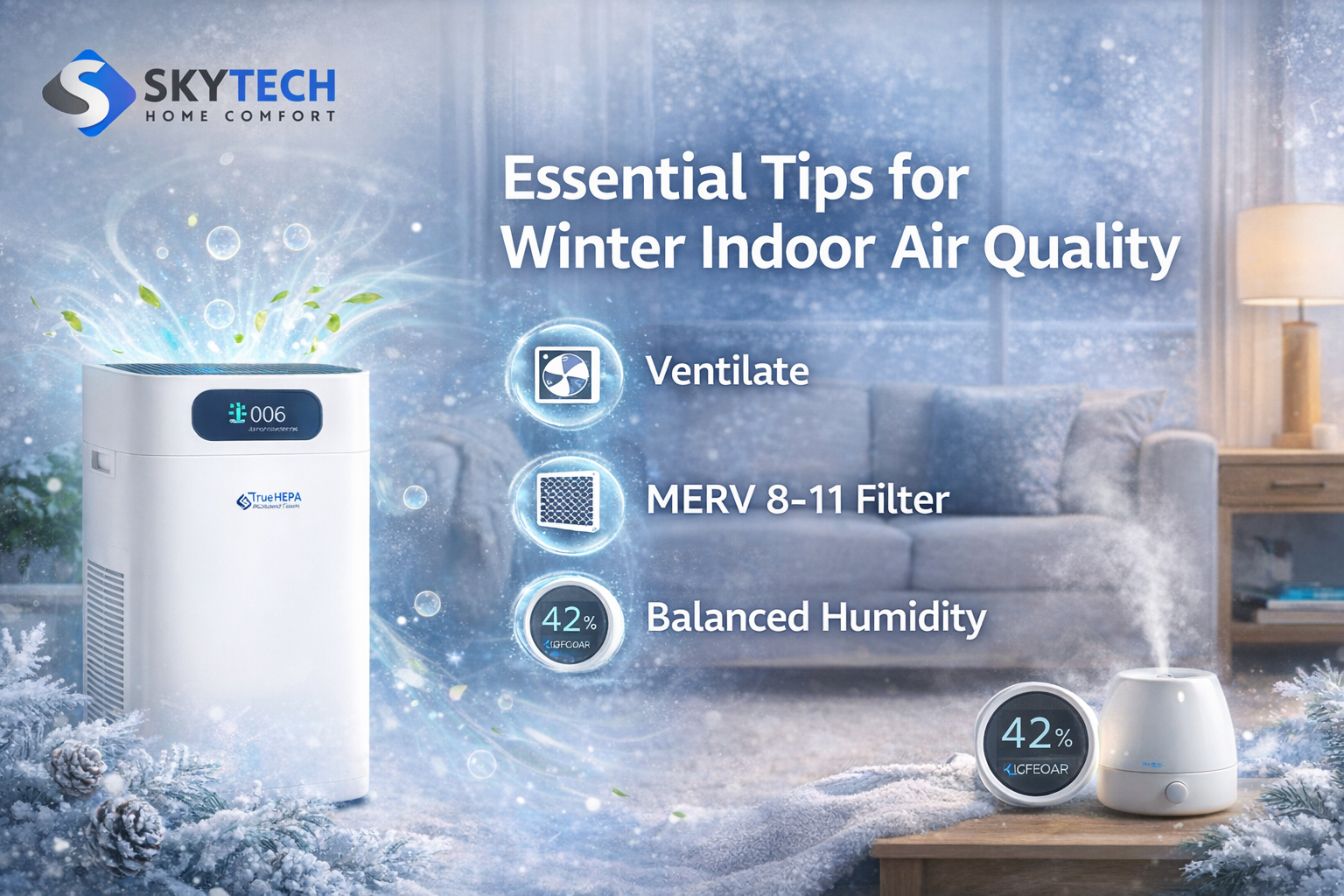
Improve winter indoor air quality by reducing indoor pollutants, adding fresh air, and using the right filters. Simple tips for a healthier, more comfortable home.
If you wake up with a blocked nose, dry throat, or your allergies feel worse in winter, your indoor air could be the reason. In cold weather, we keep doors and windows closed to stay warm. That also means the air inside does not get refreshed, and dust, smells, and moisture can build up.
Think of your home like a closed box in winter. Cooking, cleaning, candles, and even shower steam can add pollution to the air. When there is not enough fresh airflow, these things stay inside longer and can make the air feel heavy and irritating.
The good news is you can improve your air without doing anything complicated. At SkyTech Home Comfort, we recommend focusing on three simple steps. Control the source, bring in fresh air, and filter the air in your home.
Control and Ventilate
Use kitchen and bathroom fans to remove smoke, smells, and moisture. Open windows for a few minutes when possible to refresh indoor air.
Filter Effectively
Use a pleated furnace filter with a MERV rating between 8 and 11. Check it monthly and replace it about every 90 days during winter.
Balance Humidity
Keep indoor humidity between 30 percent and 50 percent. Use a humidifier if air is too dry. Use fans or a dehumidifier if the home feels too damp.
Winter air problems usually happen because fresh air is not moving through the house. Since the home stays sealed, dust, moisture, and everyday fumes build up faster. A few simple daily habits can help you feel more comfortable and breathe easier.
Many people notice more dust in winter, and it is normal. In warmer months, open windows help move particles out. In winter, the house stays closed and dust stays trapped inside.
Most dust also comes from inside the home. It is a mix of skin cells, fabric fibers, pet dander, and tiny bits of dirt brought in on shoes. Walking on carpets, making beds, or shaking blankets can push that dust back into the air.
To reduce dust, use the right cleaning method. Dry dusting can spread particles around. A damp microfiber cloth works better because it grabs and removes dust. Vacuuming also helps a lot. If allergies are a big issue, a vacuum with a HEPA filter is a smart choice.
Some everyday habits add pollution to indoor air without you realizing it. Cooking can release smoke and tiny grease particles. Candles can add soot and fine particles. These can linger in the air and may irritate breathing.
Showers are another big one. Steam raises humidity. When that warm moisture hits a cold window, you get condensation. If moisture stays around too often, it can lead to mold and mildew, which is a common allergy trigger.
Two simple habits help a lot.
1 Run your kitchen exhaust fan every time you cook
2 Run your bathroom fan for 15 to 20 minutes after each shower
These fans remove pollution and moisture before it spreads through the house.
That strong smell from new paint, furniture, mattresses, or some cleaning products usually comes from VOCs. VOCs are chemical fumes that many products release into the air.
In winter, when the home is closed up, these fumes can build up faster. This can cause symptoms like headaches, irritated eyes, and dizziness for some people.
The easiest solution is quick ventilation. When you bring home new furniture or use strong cleaners, open windows for 5 to 10 minutes. If you can, open two windows on different sides of the home to create airflow and push the fumes out faster.
Many people think the furnace filter only protects the heating system. But it also helps clean the air in your home. When your heat runs, it pulls air from your rooms, passes it through the filter, then sends it back out.
The key is using the right filter. Basic fiberglass filters mostly catch large dust. For better indoor air, use a pleated filter with a MERV rating between 8 and 11. This range helps capture smaller particles like pollen and mold spores without causing airflow problems.
How often should you change it
Check your filter once a month. If it looks gray and clogged, replace it. In winter, it is smart to replace it at least every 90 days because the system runs more often.
Winter humidity can be tricky. Many homes become very dry when cold air is heated. Dry air can cause dry skin, scratchy throat, and static electricity. It can also irritate your nose and make you feel more uncomfortable.
On the other hand, too much humidity can cause window condensation, musty smells, and mildew. Damp areas can lead to mold growth, which can worsen allergies and asthma.
A hygrometer is a small low cost device that tells you your indoor humidity level. The ideal range for most homes is 30 percent to 50 percent.
If your home is below 30 percent, a humidifier can help
If your home stays above 50 percent, use exhaust fans more often or consider a dehumidifier
Even with good cleaning and ventilation, winter air can still trap tiny particles. An air purifier can help, especially in rooms where you spend the most time.
For best results, choose a purifier with a HEPA filter. HEPA filters can capture tiny particles like dust, pet dander, pollen, and smoke.
Keep in mind that most portable purifiers are made for one room, not the whole house. A good place to start is the bedroom, since you spend many hours there. If you have pets, the living room is another good spot.
When choosing a purifier, look at CADR. CADR tells you how much clean air the unit can produce. A simple rule is that the CADR should be at least two thirds of your room size in square feet. For example, a 150 square foot room needs a CADR around 100.
You do not need a big change to improve winter air. Small habits make a big difference. Use this simple approach. Control the source, bring in fresh air, and filter the air.
Start with these easy steps.
1 Check your furnace filter and replace if needed
2 Use kitchen and bathroom fans every time you cook or shower
3 Open a window for 5 minutes daily when possible
These steps help reduce dust, fumes, and moisture so your home feels fresher and healthier.
Better winter indoor air comes down to simple habits. Remove pollution at the source, add fresh air when you can, and use good filtration. By using exhaust fans, changing furnace filters regularly, and keeping humidity in the healthy range, you can reduce dust, allergens, VOCs, and moisture problems. This makes your home more comfortable and helps you breathe easier all winter.